
Why every millimetre matters in luxury residential design.
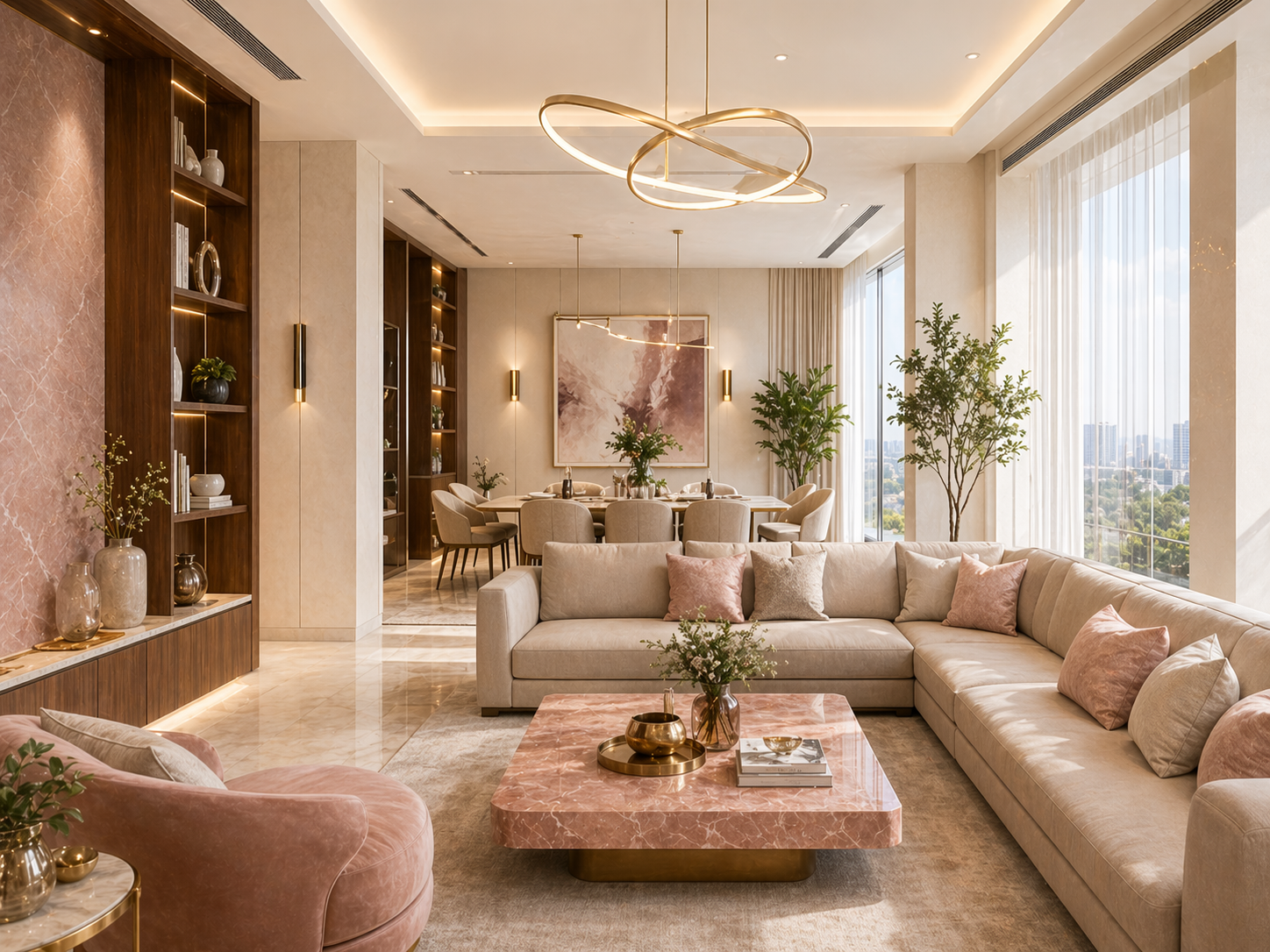
Walk into a luxury home that has been designed with discipline and the difference is immediate, even if you cannot name it. The skirting meets the door frame perfectly. The veneer flow continues across the joinery break. The light from the spotlight just catches the edge of a stone vein, not the grout line. Most clients describe these spaces as "calm" or "expensive." What they are actually responding to is precision — and the work of getting precision right is measured in millimetres.
MM Designs takes its name from this idea. The millimetre is the smallest unit you will commonly use on a residential project, and it is also the unit at which design decisions either resolve or fall apart. The spacing of a tap from the basin edge. The setback of a niche. The reveal of a ceiling cove. None of these are big decisions on a drawing. All of them are big decisions in the room.
The room you feel before you see it
People rarely walk into a space and assess proportion consciously. They feel it. A ceiling that is even fifty millimetres lower than ideal will produce a slightly compressed mood that the client cannot articulate but will quietly avoid sitting in. A door handle placed at standard height feels normal; a door handle placed two centimetres higher than the eye expects produces a tiny, repeated friction across years of use. These small misalignments accumulate. A luxurious home is not the absence of ornament — it is the absence of friction.
What we hold to a millimetre
- Joinery alignment with skirting, ceiling and architrave datum lines
- Reveals between materials of different finish and depth
- Light fitting offsets — wall washers, downlights, niche LEDs
- Door swing arcs and the cone of activity around them
- Switch and outlet heights, grouped and aligned across rooms
- Stone slab joints, especially across vanity tops and bookmatched walls
- Hardware spacing on long runs of cabinetry
The luxury client did not pay for stone. They paid for the joint between two pieces of stone to be invisible.
Why the discipline pays off later
Precision early is cheaper than precision late. A ceiling cove drawn loosely on the design package becomes a problem at site that costs days to resolve. A switch plate group dimensioned roughly looks acceptable on plan and incoherent in a photograph. We design houses to be lived in, not just photographed — but we use the photograph as a discipline. If a wall does not photograph well, it usually has a small misalignment that you would have felt anyway.
Detail is a kindness
Ultimately, the discipline of precision is a kindness to the client. It removes from their daily life the dozens of tiny irritations that come from a house that is "almost there." It frees them to enjoy the rooms instead of editing them in their head. That is what luxury means to us — not the spend, but the silence after the spend, when the room finally lets you settle into it.