
From brief to brand — designing retail spaces that convert.
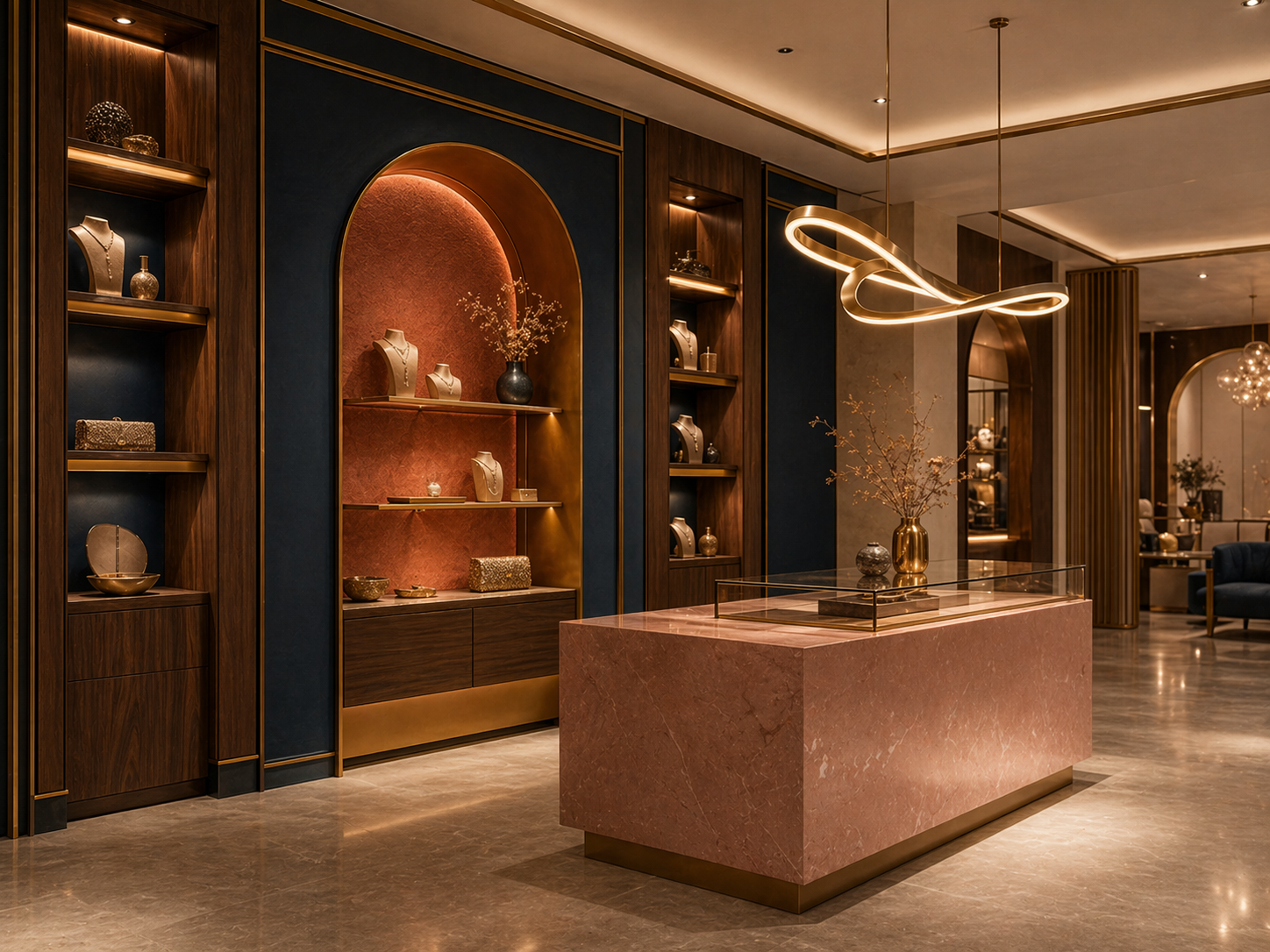
Retail design has one job that all the others rest on: it has to move a customer from threshold to purchase, gracefully. The spaces that do this best do not look like sales environments at all. They feel like a brand inviting you in, walking with you, and quietly making it easy to say yes. The architecture and interior decisions behind that experience are precise — and the difference between a store that converts and one that doesn't is rarely about square footage.
Sightline is everything
The first sightline a customer has when they cross the threshold is the most expensive moment in a retail space. We design that view deliberately. Where is the hero product placed? What does the eye land on next? Where does the wall lead them? A successful retail layout is a sequence of visual hooks and resolutions — the first hook earned by sightline, the last resolution earned by checkout.
The four design moves we use most
- Threshold: a moment of compression at the entry that calms the customer
- Hero zone: the largest, best-lit, most narratively rich part of the store
- Discovery loop: a path that returns the customer to the start, not a dead end
- Conversion edge: a soft, considered transaction zone — never a hard counter mid-floor
Retail isn't a stage for a brand. It is the brand, in three dimensions.
Material as voice
A retail material palette is rarely about beauty. It is about voice. A skincare brand asks for warm light, plaster textures, biomorphic edges. A premium watch brand asks for cool stone, brushed metal, low ambient light and tight spotlit product. A streetwear flagship asks for raw concrete, signage at scale, sound at energy. The palette translates the brand brief — and a confused palette gives a customer a confused first impression.
The metric the design has to chase
Beautiful retail does not always convert. Beautiful retail that has been designed around a clear customer journey does. We measure success not in the photographs of opening week, but in the dwell time at the hero zone, the conversion lift in the first two months, and whether the staff find it easy to operate from the back-of-house. Those are the numbers a retail design has to earn.