
Healthcare interiors — designing for calm and trust.
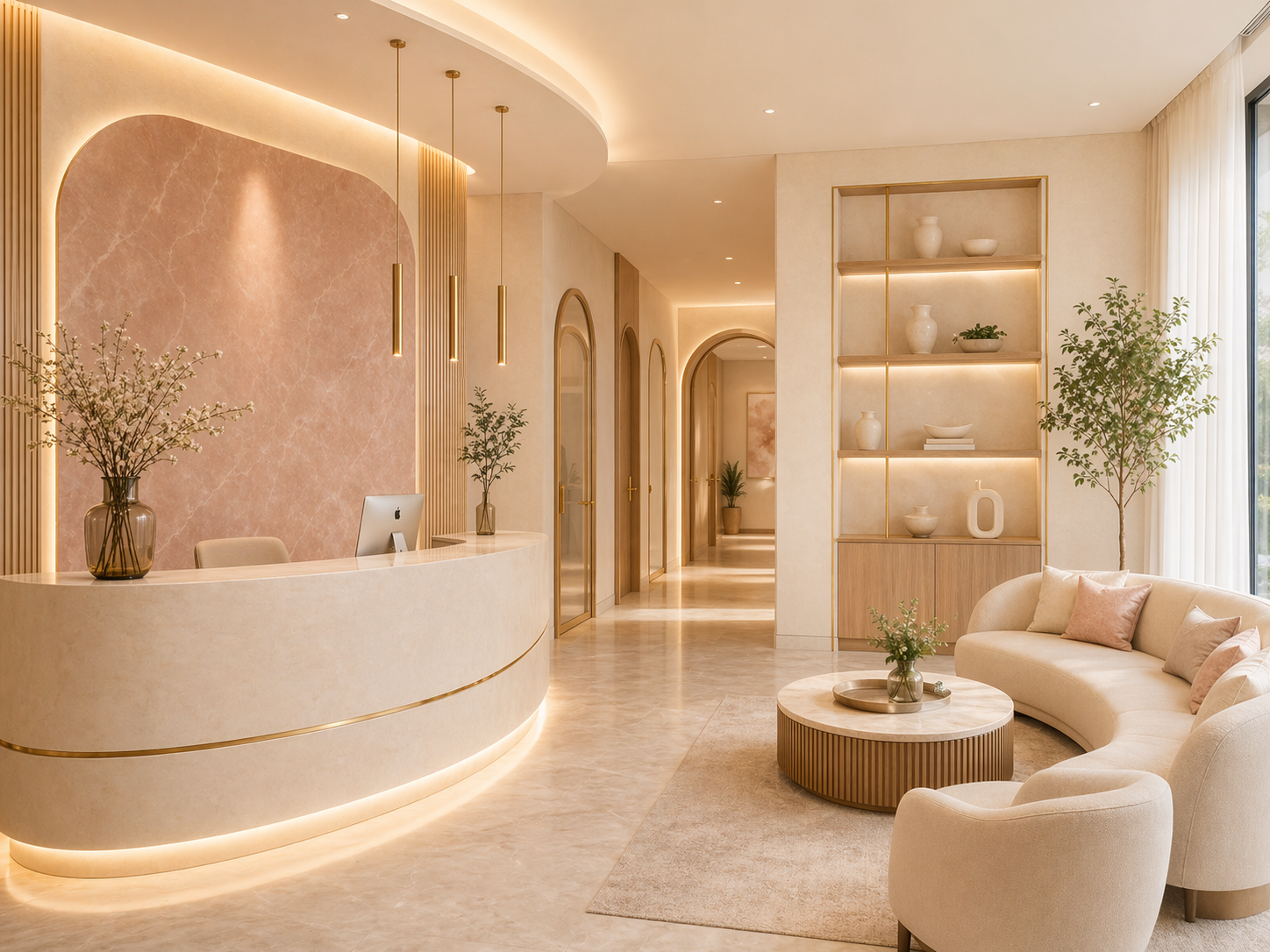
The first design decision a healthcare space makes is one the architect rarely sees on a drawing: what mood does the patient bring through the door? Most patients arrive anxious. Many arrive scared. The design of a clinic, hospital wing, diagnostic centre or wellness space starts here, with the recognition that the room has to absorb the patient's state before it asks anything of them. Done well, the design lowers anxiety before any clinician has spoken a word.
Material lowers the heart rate
Hard, glossy, cold surfaces — the default of older Indian hospitals — register to the body as institutional. Warm timber, matte plaster, natural stone, soft acoustic textiles all do the opposite. They tell the body it is in a cared-for space, not a procedural one. We are not arguing for residential softness in clinical zones; we are arguing for the conscious choice of what the patient touches, hears and sees in the first sixty seconds.
Five interventions that matter
- Daylight at the waiting area — the strongest mood-shift in the building
- Soft acoustic ceilings — to absorb the noise the patient already carries
- Wayfinding without clutter — quiet signage, clear sightlines
- Privacy by layout — sightlines designed to never expose the vulnerable
- A point of stillness — a courtyard, a planted wall, a quiet bench
The waiting room is where most of the design has to do its work.
The procedural side, designed quietly
Healthcare interiors must also do the unglamorous work — infection control, ease of cleaning, fire safety, equipment layouts, accessibility, MEP coordination, signage compliance. Good design hides this work and good documentation makes sure it is not forgotten. A room that looks calm and is procedurally compliant is the result of two design teams working in lockstep — interior, and technical. We carry both in-house.
Trust is built from consistency
Patients return to healthcare spaces that feel consistent. The same calm at the entry, the same calm at the waiting room, the same calm at the consultation, the same calm at discharge. A space that is luxurious at one end and clinical at another erodes trust. The most successful healthcare interiors keep one steady atmospheric note across the journey — and let the clinician do the rest.